

Three Blind Mice
Three Blind Mice (TBM) is the most famous independent Japanese jazz label of the 1970s. Its catalog, comprising over 130 releases, served as the primary platform for artists defining the golden age of Japanese modern jazz, heavily featuring Contemporary Jazz and the vibrant sounds of Jazz-Funk and Fusion. TBM’s legendary reputation is largely due to its commitment to exceptional high-fidelity audio, a vision driven by founder and sound engineer Takeshi “Tee” Fujii. Key releases include the seminal trio album “Blow Up” (1973) by Isao Suzuki and the release from vocalist Ayako Hosokawa (“A Whisper of Love”), highlighting the label’s focus on innovative, sonically rich recordings.

The Story of Three Blind Mice
Three Blind Mice launched in June 1970 as a showcase for Japan's emerging jazz performers, founded by passionate jazz fan Takeshi "Tee" Fujii with the ambition of becoming the "Blue Note of Japan." The label assembled a formidable production team with engineer Yoshihiko Kannari handling recordings and Ben Nishizawa as art director, creating what would become known as the TBM iron triangle. Early releases documented a vibrant era in Japanese jazz development, with stars like bassist Isao Suzuki, pianist Tsuyoshi Yamamoto, drummer George Kawaguchi, trumpeter Terumasa Hino, and vocalist Mari Nakamoto recording their debut albums on the label. Kosuke Mine's "Mine" (1970) introduced the hard bop saxophonist's ferocious debut, while Masaru Imada's "Now!" (1971) became the label's second release and the pianist's first leader album. The breakthrough came with Isao Suzuki's "Blow Up" (1973), an adventurous set merging classic hard bop with unusual touches like scratching cello and found percussion sweeps on "Aqua Marine," recorded with the Suzuki Trio/Quartet featuring drummer George Otsuka, pianist Kunihiko Sugano, and bassist Takashi Mizuhashi. The album won the Jazz of Japan Award and the Jazz Disc Award from Swing Journal in 1973, establishing TBM's reputation for supreme fidelity that would become the benchmark for audiophile jazz recordings worldwide.
Tsuyoshi Yamamoto's "Midnight Sugar" (March 1974) cemented the pianist as one of TBM's two major artists alongside Suzuki, earning the Best Engineering Award and Jazz Disc Award of Swing Journal in 1974. Recorded at Aoi Studio in Tokyo, the album featured Yamamoto with bassist Isoo Fukui and drummer Tetsujiro Obara playing two of Tsuyoshi's own blues improvisations alongside jazz ballads that became standards for the trio, captured with crystal clarity that gave the impression of standing right in the studio surrounded by the musicians. The label's commitment to sound quality became legendary, with near-field recording techniques delivering a realism that few could match. TBM standardized the practice of listing recording equipment and studio configurations on album covers, transparently documenting their technical achievements. The mid-1970s brought a steady stream of releases showcasing the label's range, from Teruo Nakamura's fusion on "Unicorn" (1973) to Masaru Imada Trio's jazz-funk burner "Green Caterpillar" (1975), Isao Suzuki's "Orang-Utan" (1975), and big band recordings like Tatsuya Takahashi and Tokyo Union's "Scandinavian Suite" (1977). Vocalist Ayako Hosokawa recorded "Mr. Wonderful" (1977) with Tsuyoshi Yamamoto and strings, while Tsuyoshi Yamamoto's own "Misty" became another sought-after audiophile classic. The label won the Jazz Disc Award five times in Japan during this period, documenting new talents with uncompromising sound quality and style.
The late 1970s marked TBM's commercial peak, with releases maintaining the label's exacting standards while expanding into various jazz subgenres. Masaru Imada Quartet's "Remember of Love" (1978), Ayako Hosokawa's "Call Me" (1979) with Toshiyuki Miyama and The New Herd, and Bingo Miki's big band recordings "Back To The Sea" (1978) and "Montreux Cyclone" (1979) demonstrated the label's breadth. The early 1980s brought American artists into the fold, with Duke Jordan Trio's "So Nice Duke" (1982) adding international prestige to the catalog. However, the broader economic climate began affecting TBM's operations, with distribution arrangements shifting to Japanese Phonogram, then Trio, German ATR, American Cisco, and Hong Kong's Kinsen as the label struggled to maintain its independence. New recordings became increasingly infrequent after the mid-1980s, though the label's reputation among audiophiles only grew stronger. Interest in Takeshi Fujii's phenomenal success led to compilation releases, with "The Famous Sound of Three Blind Mice" volumes (1987-1989) selecting favorite tracks recorded between 1973 and 1978, including the most popular tunes like "Blow Up," "Misty," "The Lady Is a Tramp," "Scandinavian Suite," and "Midnight Sunrise." These compilations provided Japanese, German, and American fans access to Fujii's singular vision and taste, cementing TBM's status in the international audiophile community.
Although TBM released minimal new recordings after the 1980s, the label's golden age catalog gained recognition as central to the emerging international appreciation of "Wa Jazz" (Japanese jazz from the 1960s and 1970s). The of-the-moment realism of Yoshihiko Kannari's recordings and Takeshi Fujii's production aesthetic remained unmatched benchmarks even four decades later, with signature recordings like "Blow Up," "Midnight Sugar," and "Misty" continuing to influence recording techniques and entire label repertoires worldwide. The 21st century brought renewed interest through high-fidelity reissues, with Cisco Music (later Impex Records) partnering with Fujii for audiophile vinyl pressings mastered by Kevin Gray at AcousTech and pressed at RTI, including deluxe 45rpm editions that brought TBM's early greats to new generations of listeners. Sony Music Direct (Japan) issued SACD editions with DSD mastering from original analog master tapes, while recent Japanese reissues on Sony Music Labels faithfully reproduced original pressings with obi strips and inserts. Contemporary compilations like "Rebirth of TBM - The Japanese Deep Jazz" (compiled by DJ Tatsuo Sunaga) celebrate the label's pioneering legacy, selecting fiery, groove-driven, and exploratory works from post-bop burners and jazz-funk workouts to freeform expressions and big band arrangements. With a catalog comprising 135 releases that served as the primary platform for artists defining the golden age of Japanese modern jazz, Three Blind Mice stands as one of jazz's most important underground archives, its commitment to exceptional high-fidelity audio and innovative, sonically rich recordings continuing to inspire musicians, producers, and collectors worldwide.
Essential Three Blind Mice Albums
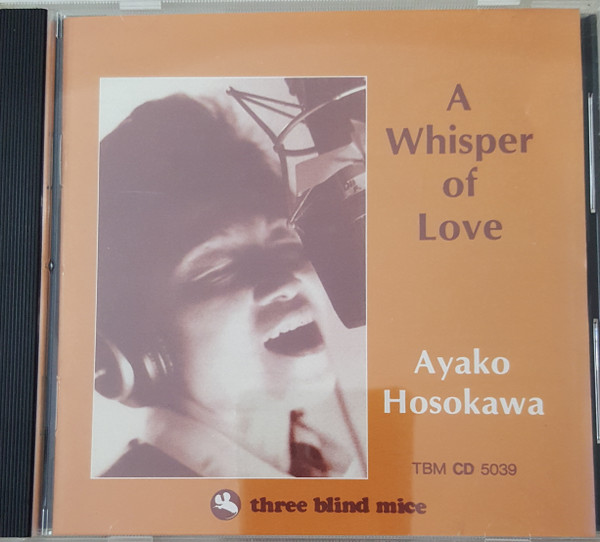
A Whisper of Love
Ayako Hosokawa
2020

Scandinavian Suite
Bingo Miki, Tatsuya Takahashi & Tokyo Union
1977
Jazz-Funk

Fukumura, Hiroshi Quintet
The Hiroshi Fukumura Quintet
1973
Post Bop
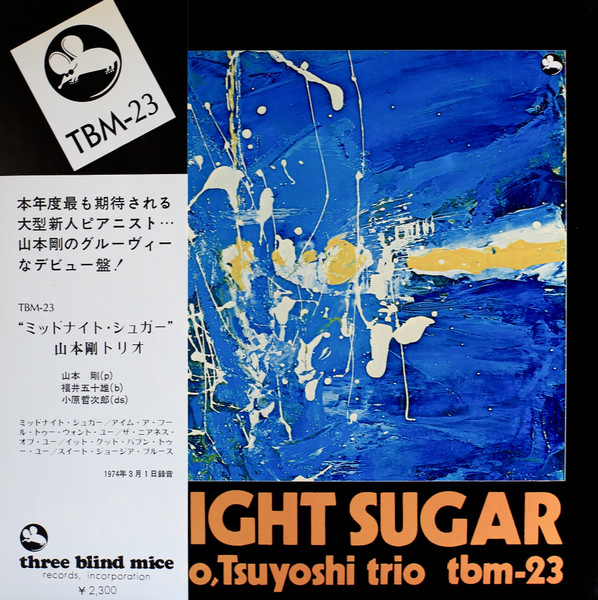
Midnight Sugar
Tsuyoshi Yamamoto Trio
1974
Hard Bop
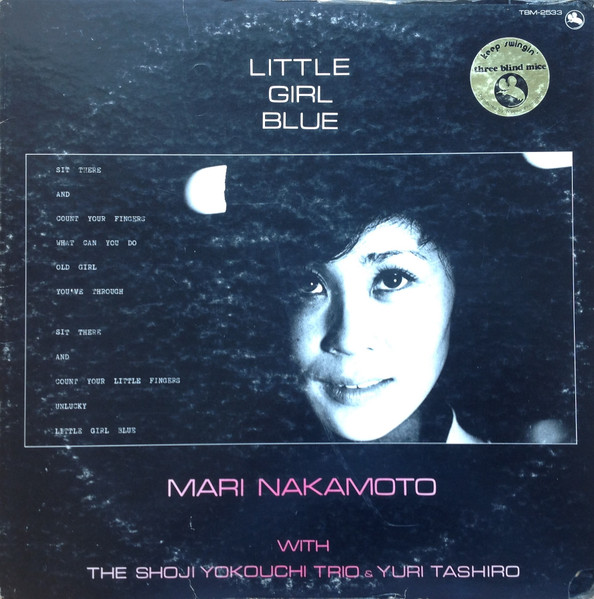
Little Girl Blue = リル・ガール・ブルー
Mari Nakamoto, Shoji Yokouchi Trio, Yuri Tashiro, Mari Nakamoto, Shoji Yokouchi Trio, Yuri Tashiro
1974
Contemporary Jazz
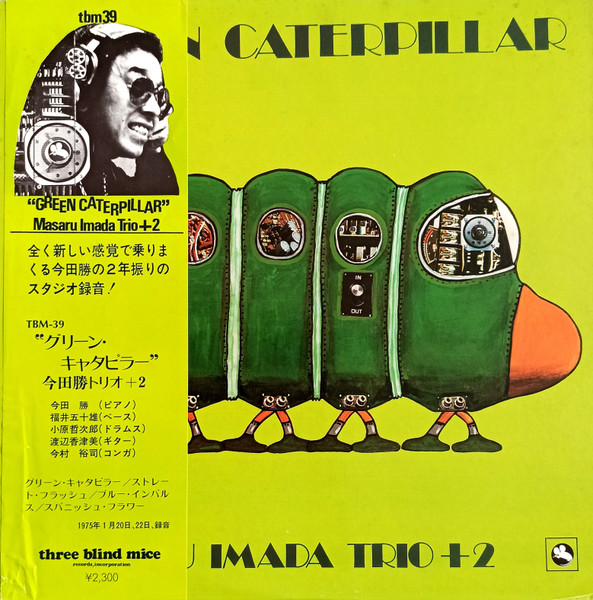
Green Caterpillar
Masaru Imada Trio
1975
Jazz-Funk
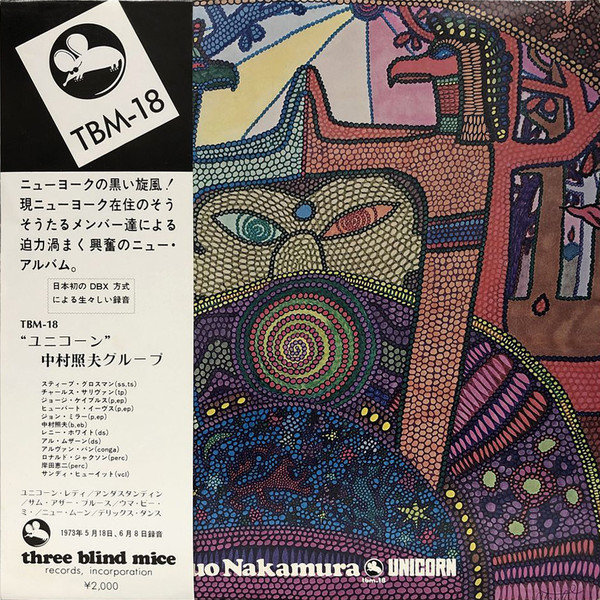
Unicorn
Teruo Nakamura
1973
Fusion
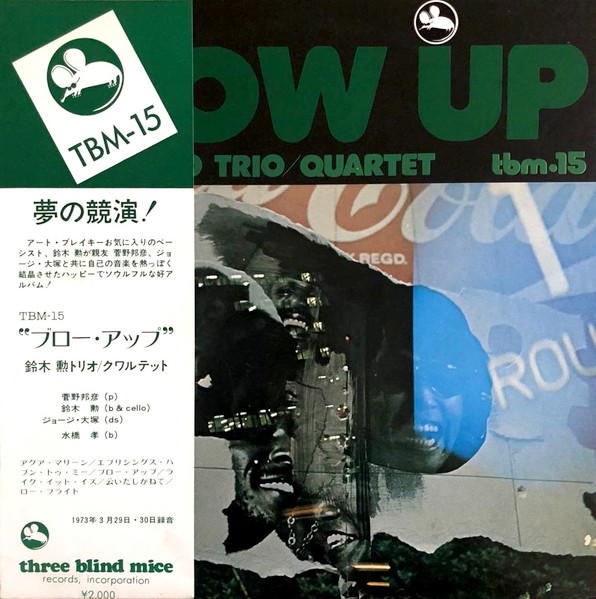
Blow Up = ブロー・アップ
Isao Suzuki Trio, Isao Suzuki Quartet, Isao Suzuki Trio, Isao Suzuki Quartet
1973
Contemporary Jazz
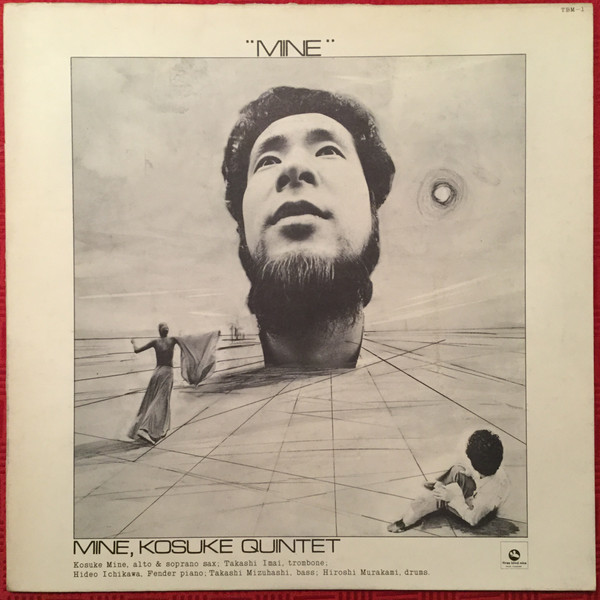
Mine
Kosuke Mine Quintet
1970
Hard Bop
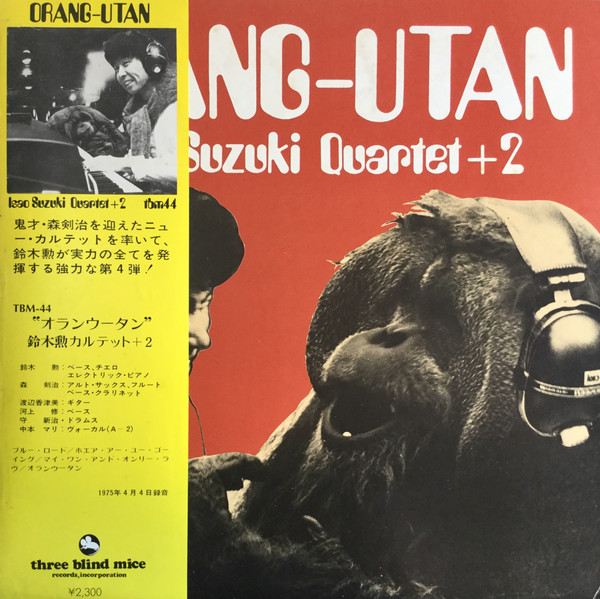
Orang-Utan
Isao Suzuki Quartet
1975
Jazz-Funk
Similar Labels



Artists
| Musician | Instrument | Releases |
|---|---|---|
| Masaru Imada | Piano | 17 |
| Tsuyoshi Yamamoto | Piano | 17 |
| Tetsujiro Obara | Drums | 16 |
| Takashi Mizuhashi | Bass | 12 |
| Mori Kenji | Alto Saxophone | 11 |
| Nobuyoshi Ino | Bass | 11 |
| Kazumi Watanabe | Guitar | 10 |
| Isoo Fukui | Bass | 10 |
| Isao Suzuki | Bass | 9 |
| Yuji Imamura | Percussion | 8 |
Personnel
| Person | Role | Releases |
|---|---|---|
| Takeshi Fujii | Producer | 108 |
| Ben Nishizawa | Art Direction | 64 |
| Yoshihiko Kannari | Engineer [Recording] | 30 |
| Yoshihiko Kannari | Engineer | 22 |
| Yoshihiko Kannari | Engineer [Recording Engineer] | 20 |
| Ben Nishizawa | Art Direction [Art Director] | 13 |
| Yoshihiko Kannari | Mixed By | 10 |
| Kazumitsu Saga | Executive-Producer | 10 |
| Yoshihiko Kannari | Recorded By | 9 |
| Akisuke Fukutomi | Executive-Producer | 9 |
Genres & Styles
| Genre | Releases | Percentage |
|---|---|---|
| Jazz | 135 | 99.3% |
| Funk / Soul | 4 | 2.9% |
| Blues | 2 | 1.5% |
| Pop | 1 | 0.7% |
| Style | Releases | Percentage |
|---|---|---|
| Contemporary Jazz | 53 | 39% |
| Free Jazz | 17 | 12.5% |
| Post Bop | 17 | 12.5% |
| Jazz-Funk | 14 | 10.3% |
| Fusion | 14 | 10.3% |
| Modal | 12 | 8.8% |
| Free Improvisation | 11 | 8.1% |
| Big Band | 11 | 8.1% |
| Avant-garde Jazz | 8 | 5.9% |
| Vocal | 8 | 5.9% |
Releases Timeline
Three Blind Mice Discography
Total: 135 releases
| Artist | Album | Style | Year |
|---|---|---|---|
| "Jojo" Takayanagi Second Concept | Cool Jojo | Cool Jazz | 1980 |
| Allan Praskin Quartet | Encounter | Contemporary Jazz | 1971 |
| Ayako Hosokawa | To Mr. Wonderful | 1977 | |
| Ayako Hosokawa | A World Of Love | Contemporary Jazz | 1997 |
| Ayako Hosokawa | A Whisper of Love | 2020 | |
| Ayako Hosokawa, Masaru Imada Quartet | No Tears | Contemporary Jazz | 1978 |
| Ayako Hosokawa, Toshiyuki Miyama & The New Herd | Call Me | Contemporary Jazz | 1979 |
| Bingo Miki & The Inner Galaxy Orchestra | Back To The Sea | Big Band | 1978 |
| Bingo Miki & The Inner Galaxy Orchestra | Montreux Cyclone | Big Band | 1979 |
| Bingo Miki, Tatsuya Takahashi & Tokyo Union | Scandinavian Suite | Jazz-Funk | 1977 |
| Duke Jordan Trio | So Nice Duke | 1982 | |
| Eiji Nakayama, Masaru Imada | North Plain | 1982 | |
| Fumio Karashima Trio | Gathering | 1977 | |
| George Kawaguchi's The Big 4 | The Big 4 | Contemporary Jazz | 1976 |
| George Otsuka Quintet | In Concert ! | Jazz-Funk | 1973 |
| George Otsuka Quintet | Go On | Post Bop | 1973 |
| George Otsuka Quintet | Physical Structure | Post Bop | 1976 |
| Hidefumi Toki Quartet | Toki | 1975 | |
| Hidehiko Matsumoto Quartet | Sleepy | Contemporary Jazz | 1976 |
| Hidehiko Matsumoto Quartet | Samba De Sun | 1979 |