
CTI Records
The Story of CTI Records
Producer Creed Taylor founded CTI (Creed Taylor Incorporated) in 1967 as a subsidiary of A&M Records, negotiating a $1 million deal with label co-founders Herb Alpert and Jerry Moss to launch A&M's first jazz venture. Taylor brought formidable credentials from his previous work establishing Impulse! in 1960 and produced bossa nova breakthroughs for Verve with Stan Getz, Antonio Carlos Jobim, and Astrud Gilberto. The label's debut release, Wes Montgomery's "A Day in the Life" (1967), achieved gold status by pairing the guitarist with lush orchestral arrangements of Beatles songs, setting CTI's template for accessible, high-fidelity jazz that could reach beyond traditional audiences. Taylor recorded exclusively at Rudy Van Gelder's legendary Englewood Cliffs studio with Van Gelder engineering nearly every session, while photographer Pete Turner's striking cover imagery created instant visual brand recognition. The 3000 Series through A&M released 27 albums between 1967 and 1970, showcasing Taylor's Brazilian music affinity with Jobim's "Wave" (1967) and expanding the roster to include George Benson, whose "The Other Side of Abbey Road" (1970) continued the crossover strategy.
Taylor established CTI as an independent label in 1970, launching the iconic 6000 Series with its distinctive orange label and assembling the team that would define the label's signature sound-arranger Don Sebesky crafting lush orchestrations, Bob James and later David Matthews contributing arrangements, and a core stable of session musicians including Ron Carter, Billy Cobham, Airto Moreira, and Eric Gale. Freddie Hubbard's "Red Clay" (1970), the first release on the new independent imprint, fused hard bop with electric instrumentation and funky rhythms, establishing CTI's approach to jazz fusion and topping jazz charts while signaling the label's artistic direction. Stanley Turrentine's "Sugar" (1971) and George Benson's stripped-down "Beyond the Blue Horizon" (1971 ) recorded when Taylor "didn't have no money to put any sweetening on it," as Benson recalled, demonstrated the label's range from soul-jazz to pure instrumental prowess. In 1971, Taylor launched Kudu Records as CTI's soul-jazz subsidiary, signing Grover Washington Jr., Hank Crawford, Esther Phillips, and Johnny Hammond Smith. The label's commercial breakthrough arrived with Eumir Deodato's "Prelude" (1973), whose jazz-funk reinvention of Richard Strauss's "Also Sprach Zarathustra (2001)" peaked at number two on the Billboard Hot 100, reached number three on the album charts, and earned a Grammy for Best Pop Instrumental Performance, making CTI the number-one jazz label in Billboard's rankings and establishing jazz fusion as commercially viable.
Following Deodato's crossover success, CTI enjoyed its creative and commercial zenith while simultaneously planting seeds of financial crisis through ambitious expansion. Bob James released his numbered series beginning with "One" (1974), "Two" (1975), and "Three" (1976), creating smooth jazz templates that would be sampled hundreds of times by hip-hop producers decades later, while Grover Washington Jr.'s "Mister Magic" (1975) and "Feels So Good" (1975) both reached number ten on album charts. Against advisers' warnings, Taylor decided in 1974 to establish CTI's own distribution network with fully staffed offices in eight cities to avoid giving distributors their cut, but the overhead proved unsustainable without another Prelude-level blockbuster. Warner Bros. and Columbia had courted CTI for distribution deals, with Warner executives threatening to "pick off CTI's artists one by one" if Taylor refused — a prophecy that came true as George Benson departed for Warner in 1976 amid unpaid royalties, followed by Freddie Hubbard, Stanley Turrentine, and Hubert Laws to various majors. Taylor switched to Motown Records for distribution in October 1974, but this partnership soured within two years, spawning bitter litigation over dubbing rights and unpaid royalties that dragged into 1979, with CTI ultimately forced to surrender Grover Washington Jr.'s entire Kudu catalog to Motown as part of the settlement.
Financial pressures from the failed distribution network, mounting legal fees from the Motown battle, artist defections, and a $600,000 loan from Columbia Records (using the master catalog as collateral) culminated in CTI filing for Chapter 11 bankruptcy on December 9, 1978, listing liabilities of $2.3 million against assets of $1.4 million. The bankruptcy ended CTI's creative independence — Columbia called in the loan and obtained ownership of approximately 130 album masters, while Motown retained the Kudu catalog. Taylor managed to keep the label operating on a reduced scale through a 1980 distribution deal with CBS Records (Columbia's parent), launching the 9000 Series with releases by Art Farmer, Nina Simone, and Patti Austin, but the glory days were over. Production slowed dramatically, reissues replaced new recordings, and by 1984 new releases had essentially ceased. During this period, Bob James successfully sued to regain ownership of his four CTI albums, fragmenting the catalog that Columbia would later consolidate under Sony ownership.
Taylor restructured CTI in 1989 and attempted a revival with "Rhythmstick" (1990), reuniting with Van Gelder and Turner for an all-star session released on multiple formats through Polygram distribution. The revamped label signed younger musicians including Charles Fambrough, Jim Beard, and Larry Coryell. The latter's collaboration with Don Sebesky on "Fallen Angel" (1993) achieved modest commercial success but couldn't recapture the 1970s magic. Taylor supervised extensive reissue programs including a 2009 series of twenty titles remastered by Van Gelder for Japanese SHM-CD release with new liner notes, demonstrating the catalog's enduring appeal. That same year, Taylor assembled the CTI All-Stars for concerts at Montreux Jazz Festival and a European tour, featuring Hubert Laws, John McLaughlin, George Duke, and Jamie Cullum. The Montreux performance, engineered by Van Gelder with Turner cover art, was released in November 2010 on CD, DVD, and Blu-ray, CTI's final release and a fitting bookend to the label's journey, reuniting the core creative team one last time while the classic catalog remained scattered across Sony (the main CTI releases), Universal (the A&M subsidiary era), and various artist-controlled rights, ensuring the CTI sound's continuing influence on contemporary jazz, fusion, and hip-hop production.
Essential CTI Records Albums
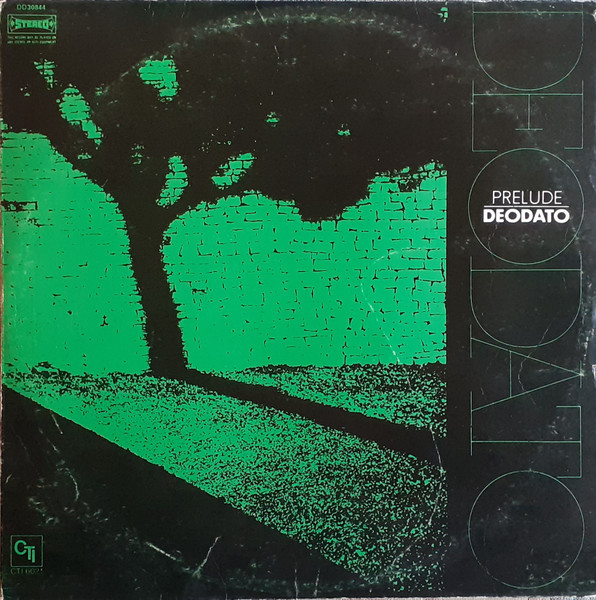
Prelude
Eumir Deodato
1973
Jazz-Funk
Deodato's synth-heavy take on "Also Sprach Zarathustra" became a surprise hit. Strauss meets Moog and funk bass. Over-the-top fusion that defined early '70s CTI sound.
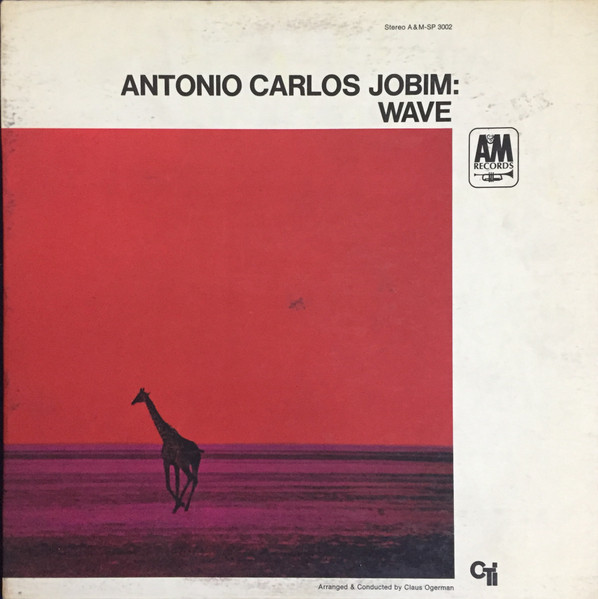
Wave
Antonio Carlos Jobim
1967
Bossa Nova
Jobim with strings and larger arrangements. The title track is one of his most beautiful compositions. Sophisticated, melancholic, perfect late-night bossa nova.
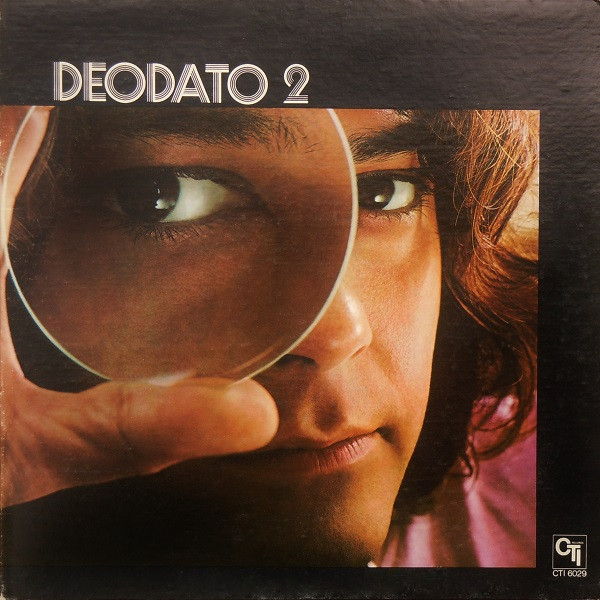
Deodato 2
Eumir Deodato
1973
Jazz-Rock
Follow-up to Prelude doubles down on the fusion formula. "Super Strut" funks hard, John Tropea's guitar cuts through. More accessible than adventurous, but it grooves.
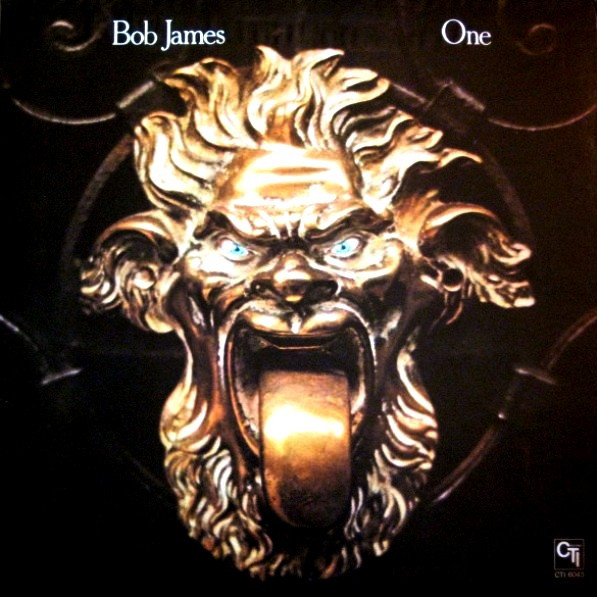
One
Bob James
1974
Fusion
James' solo debut after leaving Sarah Vaughan's band. "Nautilus" became one of hip-hop's most sampled tracks. Smooth fusion with enough jazz credibility to back it up.
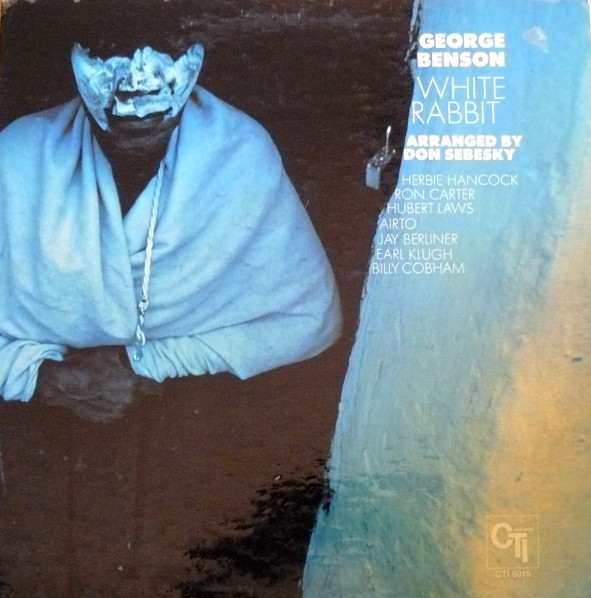
White Rabbit
George Benson
1972
Soul-Jazz
Benson tackles Jefferson Airplane's psychedelic anthem. His guitar screams and soars, CTI strings sweeten it up. Bold choice, successful execution.
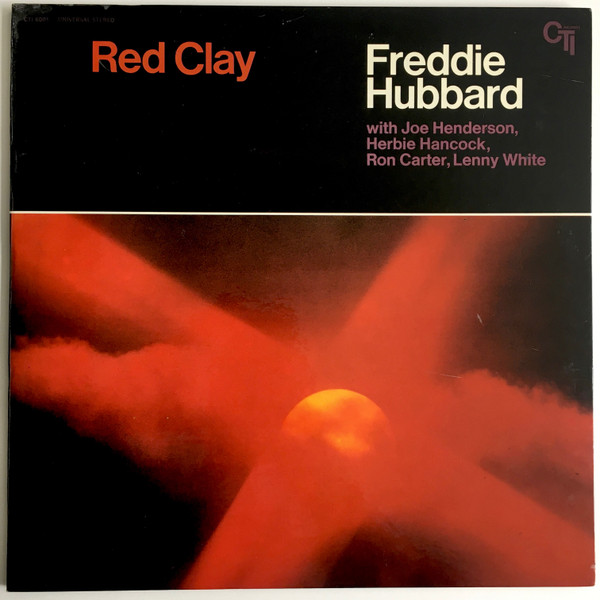
Red Clay
Freddie Hubbard
1970
Hard Bop
Hubbard at peak power with Herbie Hancock and Joe Henderson. The title track is a hard bop anthem. Raw, burning, essential Blue Note-to-CTI transition moment.
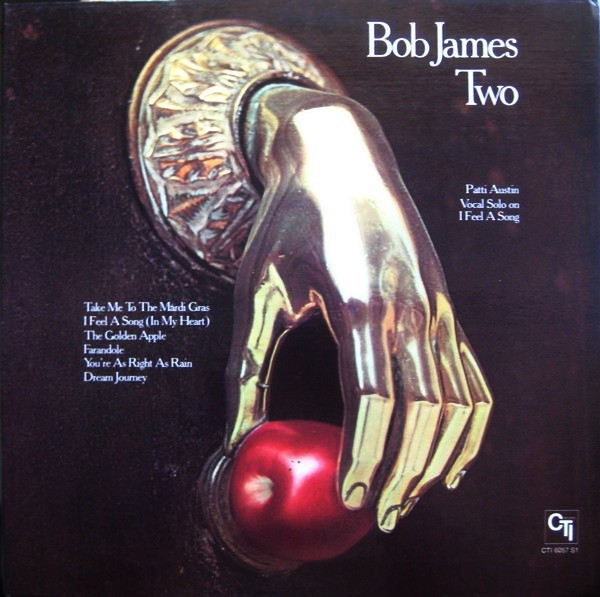
Two
Bob James
1975
Fusion
James refines his fusion formula. "Take Me to the Mardi Gras" became a sampling staple. Slick production, memorable melodies, Rhodes piano perfection.

Dune
Dave Matthews
1977
Fusion
Not that Dave Matthews. Keyboardist Matthews crafts spacey, electric fusion. CTI's later-era sound, smooth but still jazzy. Overlooked gem from the label's deep catalog.

Three
Bob James
1976
Fusion
James completes his numbered trilogy. "Westchester Lady" and "Women of Ireland" show his gift for memorable themes. Peak smooth jazz before the term existed.
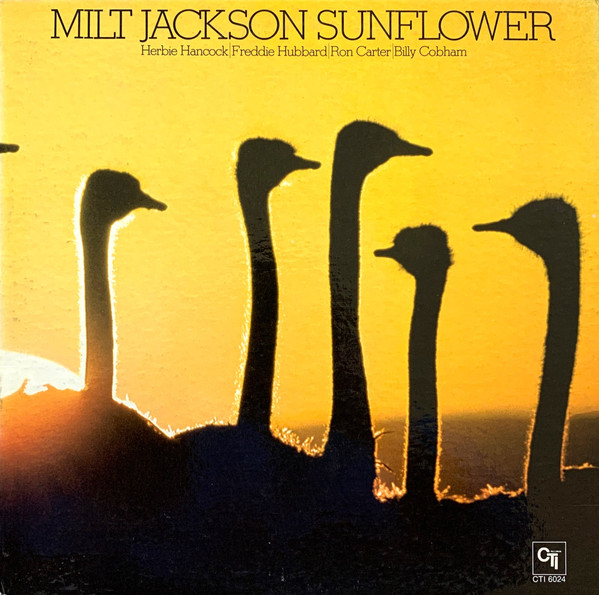
Sunflower
Milt Jackson
1973
Bags goes CTI with strings and Freddie Hubbard on trumpet. Vibes meet lush arrangements. Jackson's bebop soul intact despite the commercial production.
Similar Labels

Artists
| Musician | Instrument | Releases |
|---|---|---|
| Ron Carter | Bass | 73 |
| Hubert Laws | Flute | 53 |
| Eric Gale | Guitar | 43 |
| Charles McCracken | Cello | 41 |
| Emanuel Green | Violin | 36 |
| Airto Moreira | Percussion | 36 |
| George Ricci | Cello | 36 |
| Steve Gadd | Drums | 36 |
| Paul Gershman | Violin | 35 |
| David Nadien | Violin | 34 |
Personnel
| Person | Role | Releases |
|---|---|---|
| Creed Taylor | Producer | 277 |
| Rudy Van Gelder | Engineer | 121 |
| Rudy Van Gelder | Mastered By | 48 |
| Bob Ciano | Design [Album] | 46 |
| Rudy Van Gelder | Lacquer Cut By | 44 |
| Pete Turner | Photography By [Cover] | 36 |
| Dave Matthews | Arranged By | 27 |
| Don Sebesky | Arranged By | 27 |
| Creed Taylor | Producer [Produced By] | 18 |
| Bob Ciano | Design | 15 |
Genres & Styles
| Genre | Releases | Percentage |
|---|---|---|
| Jazz | 354 | 63.7% |
| Funk / Soul | 123 | 22.1% |
| Latin | 35 | 6.3% |
| Pop | 22 | 4% |
| Rock | 19 | 3.4% |
| Stage & Screen | 13 | 2.3% |
| Blues | 12 | 2.2% |
| Folk, World, & Country | 10 | 1.8% |
| Electronic | 7 | 1.3% |
| Hip Hop | 3 | 0.5% |
| Style | Releases | Percentage |
|---|---|---|
| Jazz-Funk | 120 | 21.6% |
| Fusion | 75 | 13.5% |
| Soul-Jazz | 67 | 12.1% |
| Soul | 37 | 6.7% |
| Contemporary Jazz | 30 | 5.4% |
| Latin Jazz | 28 | 5% |
| Post Bop | 26 | 4.7% |
| Bossa Nova | 25 | 4.5% |
| Funk | 21 | 3.8% |
| Smooth Jazz | 20 | 3.6% |
Releases Timeline
CTI Records Discography
Total: 393 releases
| Artist | Album | Style | Year |
|---|---|---|---|
| Airto Moreira | Free | Free Improvisation | 1972 |
| Airto Moreira | Fingers | Latin Jazz | 1973 |
| Airto Moreira | Parana | Latin Jazz | 1973 |
| Airto Moreira | Tombo | Latin Jazz | 1973 |
| Airto Moreira | Virgin Land | Fusion | 1974 |
| Airto Moreira | Fingers (El Rada) / Tombo In 7/4 | Latin Jazz | 1974 |
| Allan Holdsworth | Velvet Darkness | Jazz-Rock | 1976 |
| Antonio Carlos Jobim | The Composer Of Desafinado, Plays | Bossa Nova | 1963 |
| Antonio Carlos Jobim | Wave | Bossa Nova | 1967 |
| Antonio Carlos Jobim | Wave / Triste | Bossa Nova | 1967 |
| Antonio Carlos Jobim | Stone Flower | 1970 | |
| Antonio Carlos Jobim | Tide | Bossanova | 1970 |
| Antonio Carlos Jobim | Brazil | Bossa Nova | 1970 |
| Art Farmer | Crawl Space | Contemporary Jazz | 1977 |
| Art Farmer | Live In Tokyo | 1977 | |
| Art Farmer, Jim Hall | Big Blues | Contemporary Jazz | 1979 |
| Art Farmer, Joe Henderson | Yama | Post Bop | 1979 |
| Art Farmer, Yusef Lateef, David Matthews Orchestra | Something You Got | Post Bop | 1977 |
| Arthur Theus | Black Out | Soul-Jazz | 1970 |
| Arthur Theus | Black Out (Part 1) / Black Out (Part 2) | 1970 |